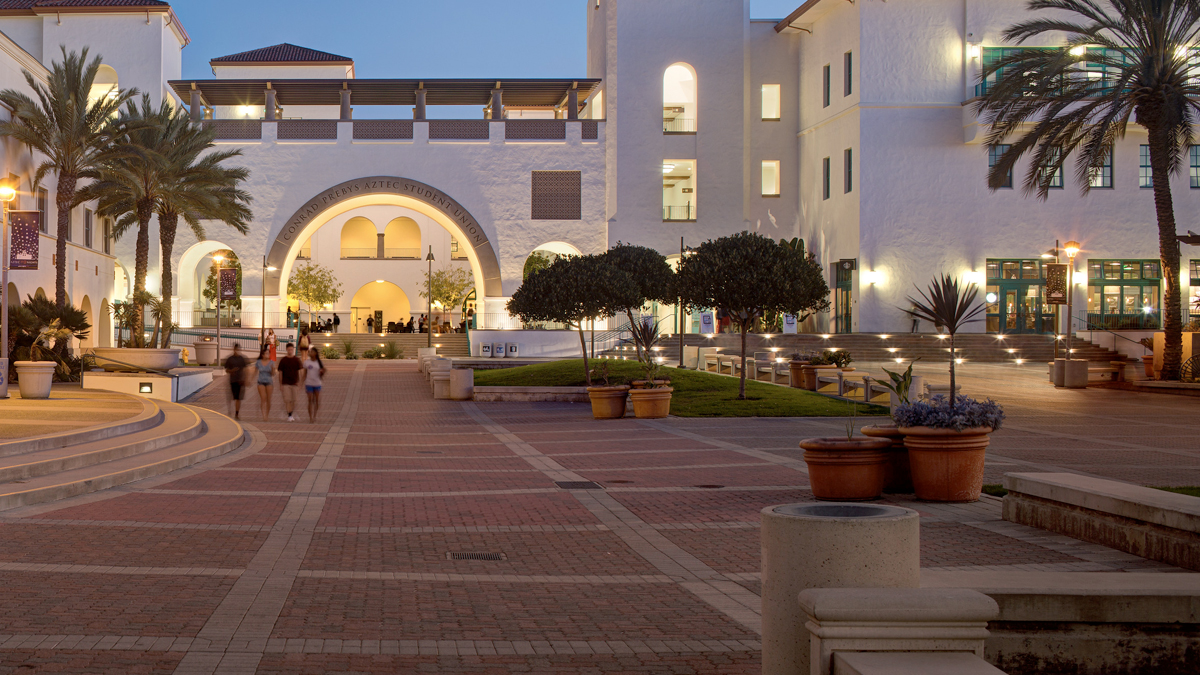
Once ‘afraid’ of math, Weichen Zhao earns prestigious AMTE math education fellowship
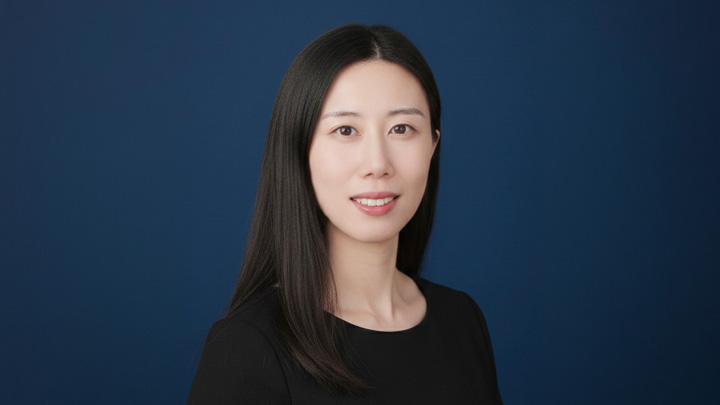
While preparing pre-service elementary educators, Weichen Zhao often gets the sense that many of her students aren’t particularly fond of mathematics.
It’s a challenge, sure, but not one the second-year assistant professor at SDSU Imperial Valley finds discouraging. Quite the opposite, actually.
“That becomes my motivation,” Zhao explains. “The core of my belief is that even though they do not like math right now, they can still engage in my class and learn to teach math in a fun and engaging way.”
That perspective has ensured that Zhao fits right in at the Center for Research in Mathematics and Science Education, SDSU’s venerable hub for advancing STEM education. And it has led her to her latest accomplishment — a prestigious STaR Fellowship, which she was accepted into in January.
Offered by the Association of Mathematics Teacher Educators (AMTE), one of the largest professional organizations in mathematics education, the fellowship is an early career induction program centered on service, teaching and research. As a fellow, Zhao will receive a year of mentorship and networking and take part in a summer institute in Park City, Utah.
This is the second straight year an SDSU faculty member has been named a STaR Fellow. Assistant Professor Brittany L. Marshall took part last year and encouraged Zhao to apply.
“My Ph.D. advisor held a position with AMTE for almost 20 years, so I always knew it was a prestigious, well-recognized association,” Zhao said. “After I came here, I noticed that my mentor (professor emeritus) Randy Philipp also holds a position in that organization. So when Brittany mentioned that this is a great chance for early career scholars, I didn’t hesitate.”
Zhao is hopeful that the fellowship will allow her to rub elbows with more experienced teacher educators who can help her advance research that is both theoretical and practically meaningful.
But that isn’t her only motivation. As a uniquely-positioned teacher educator at SDSU Imperial Valley — where approximately 99% of her students are Hispanic or Latinx and many are bilingual and transborder — she also hopes the fellowship will help her bring national awareness to her adopted community.
“I want to advocate for the teachers living in the rural borderlands region,” she says.
Learning to love math
While she comes from a vastly different background, Zhao has an understanding of where her students in the Imperial Valley are coming from.
For one thing, navigating borders and culture is a central part of her story. Zhao is from the city of Changchun in northeastern China and came to the U.S. as a graduate student at the University of Illinois Urbana-Champaign. She has lived, studied and worked in several states since 2014.
For another, she had to overcome her own early aversion to mathematics.
“Growing up, I was afraid of math,” Zhao admits. “In China, I normally would focus on procedures — getting the answer quick and correct, that's my goal. I wasn’t quick or precise in solving the problem and I normally didn’t get a good grade. I didn’t like it because it was all about competition, doing better than others.”
That all changed once she got to Southern Illinois University, Carbondale.
Zhao, who holds a bachelor’s degree in early childhood education, took a master’s-level math methods course. The professor had the students solve problems using math manipulatives. It was her first experience having math presented as a fun, hands-on activity. It expanded her perspective about what teaching math could be — and set her on a new path devoted to helping teachers spark students’ interest in math.
At SDSU Imperial Valley, that entails not only injecting fun into the curriculum but also viewing the diverse backgrounds of students as assets in the learning process. Discussions in her classroom often take place in both English and Spanish. While Zhao doesn’t speak Spanish herself, she encourages it, explaining that the bilingual nature of the learning environment has allowed her students to grasp concepts and become comfortable with the material more quickly.
“I am really interested in helping future math teachers to grow the equity and inclusive perspective when they teach math,” Zhao said. “I believe that understanding students’ social and linguistic backgrounds, and utilizing that in the math classroom can really bring math to life — to make math meaningful to them. This is my passion.”